Chinese Painting
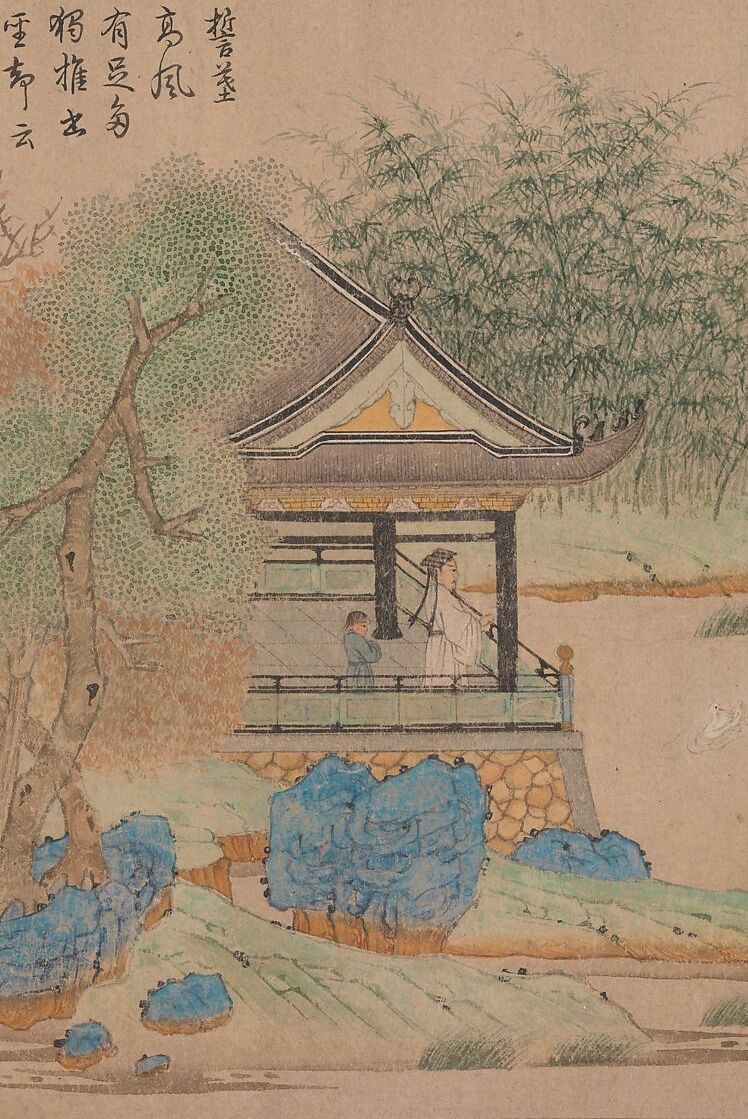
Chinese painting is one of the oldest continuous artistic traditions in the world. Painting in the traditional style is known today in Chinese as guó huà, meaning "national painting" or "native painting", as opposed to Western styles of art which became popular in China in the 20th century. It is also called danqing. Traditional painting involves essentially the same techniques as calligraphy and is done with a brush dipped in black ink or coloured pigments; oils are not used. As with calligraphy, the most popular materials on which paintings are made are paper and silk. The finished work can be mounted on scrolls, such as hanging scrolls or handscrolls. Traditional painting can also be done on album sheets, walls, lacquerware, folding screens, and other media.
Landscape painting was regarded as the highest form of Chinese painting, and generally still is. The time from the Five Dynasties period to the Northern Song period (907–1127) is known as the "Great age of Chinese landscape".
Japanese Painting
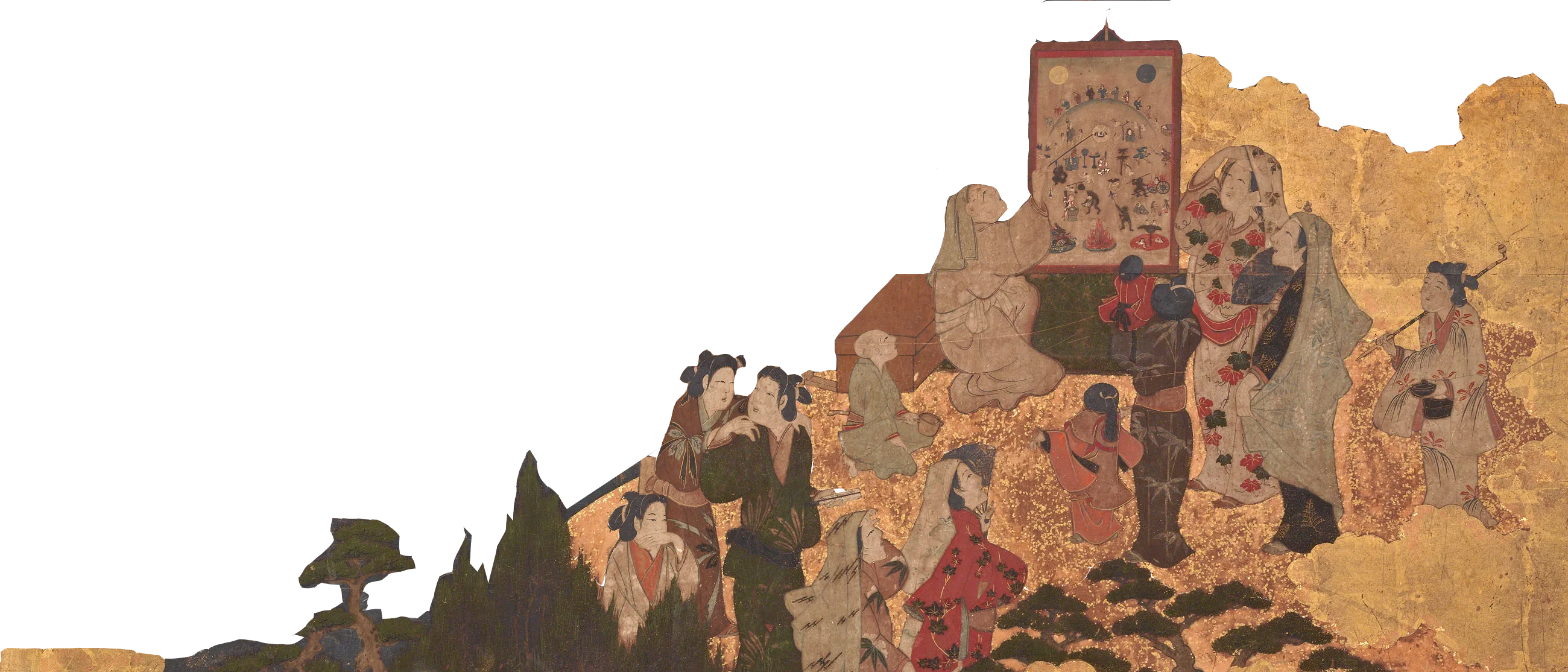
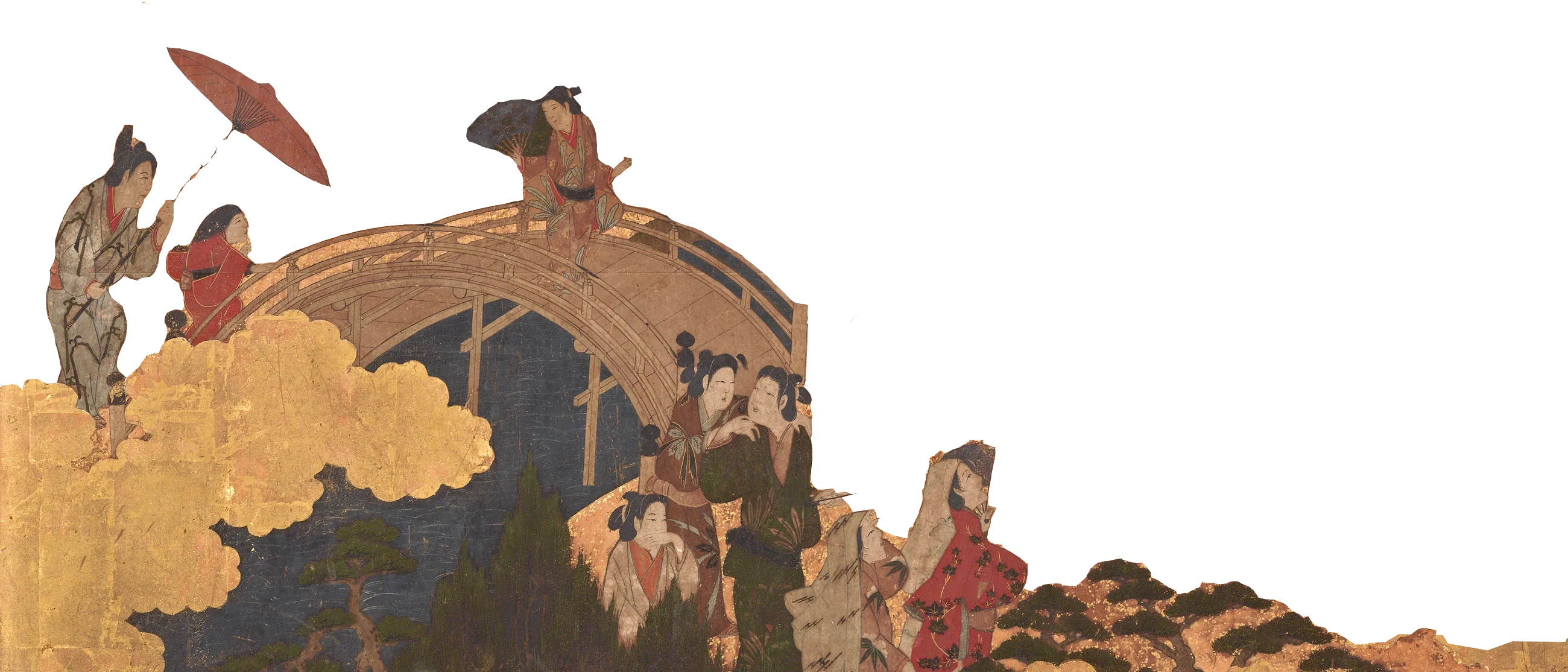
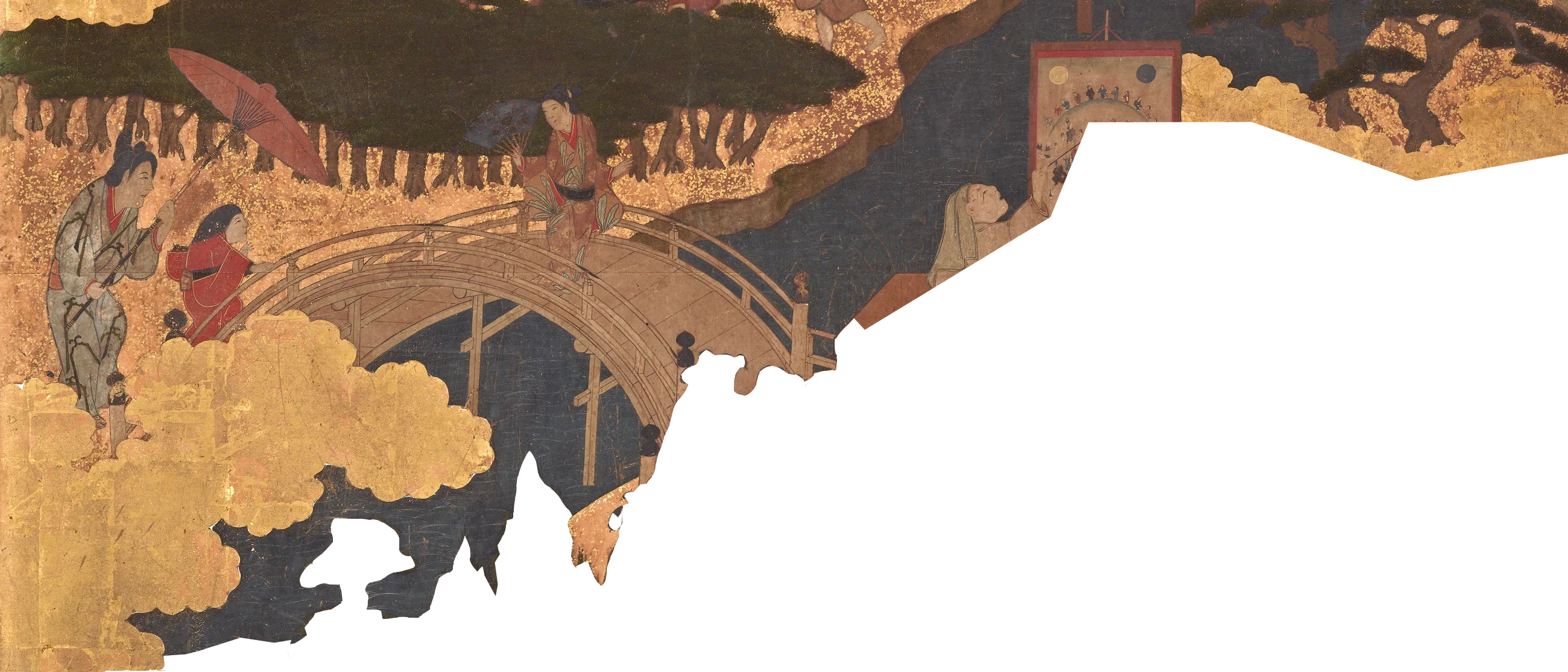
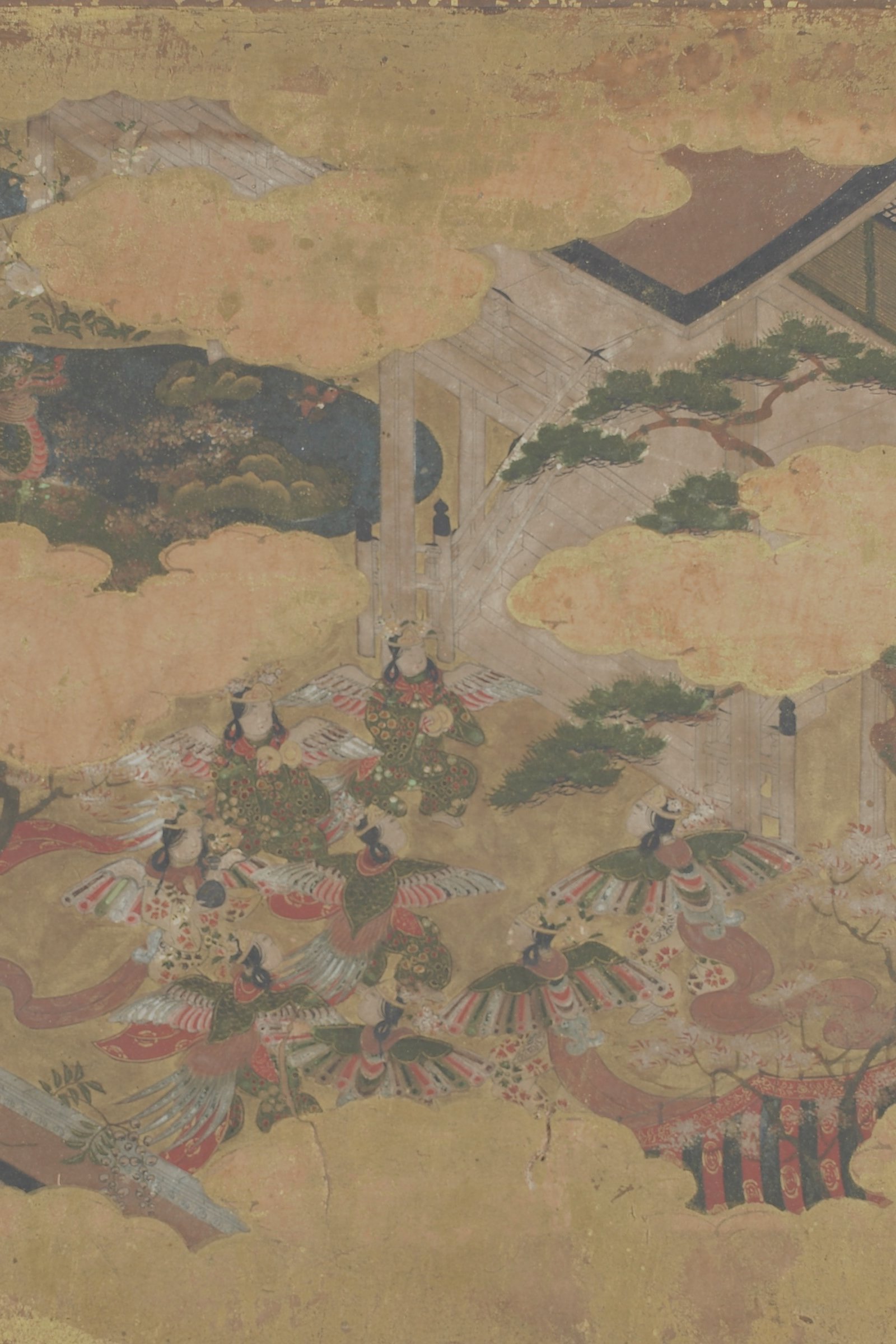
Japanese art and architecture include works of art produced in Japan from the beginnings of human habitation there, sometime in the 10th millennium BC, to the present. Japanese art covers a wide range of art styles and media, including ancient pottery, sculpture in wood and bronze, ink painting on silk and paper, and a myriad of other types of works of art; from ancient times until the contemporary 21st century.
The art form rose to great popularity in the metropolitan culture of Edo (Tokyo) during the second half of the 17th century, originating with the single-color works of Hishikawa Moronobu in the 1670s. At first, only India ink was used, then some prints were manually colored with a brush, but in the 18th century Suzuki Harunobu developed the technique of polychrome printing to produce nishiki-e.
Japanese painting is one of the oldest and most highly refined of the Japanese arts, encompassing a wide variety of genre and styles.
Korean Painting
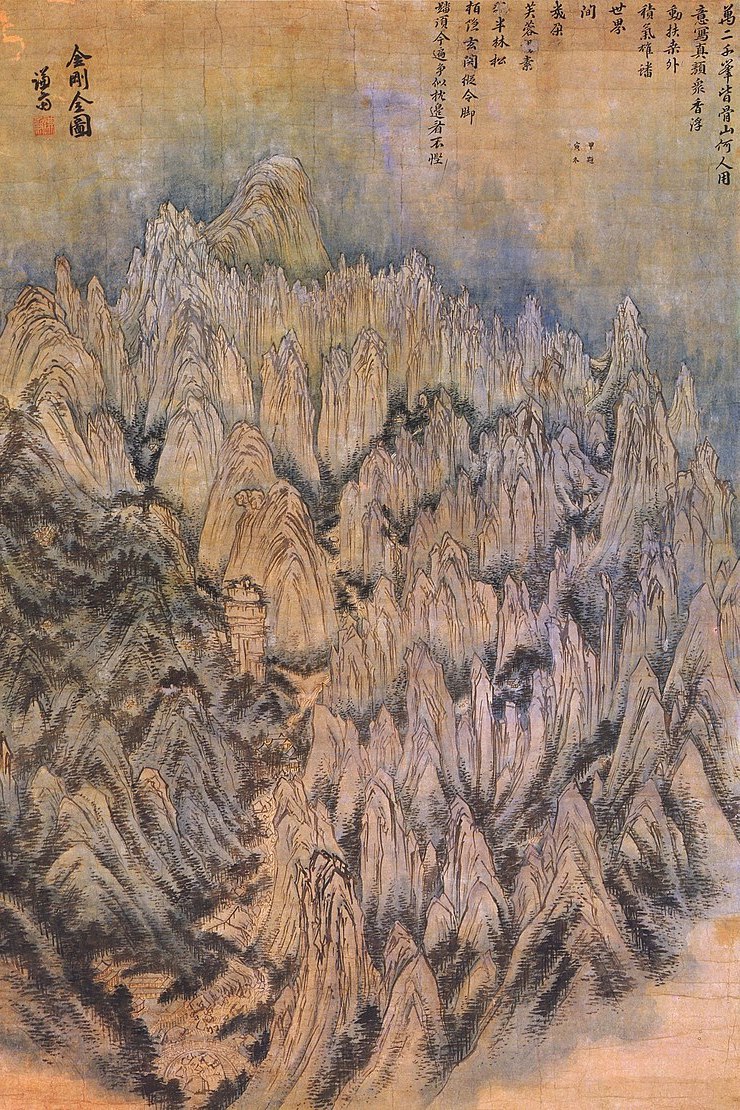
Korean art is noted for its traditions in pottery, music, calligraphy, painting, sculpture, and other genres, often marked by the use of bold color, natural forms, precise shape and scale, and surface decoration.
While there are clear and distinguishing differences between three independent cultures, there are significant and historical similarities and interactions between the arts of Korea, China, and Japan.
The study and appreciation of Korean art is still at a formative stage in the West. Because of Korea's position between China and Japan, Korea was seen as a mere conduit of Chinese culture to Japan. However, recent scholars have begun to acknowledge Korea's own unique art, culture, and important role in not only transmitting Chinese culture but assimilating it and creating a unique culture of its own. An art given birth to and developed by a nation is its own art.
credit from Wikipedia